Most repellent confusion comes down to one question: DEET or picaridin? Picaridin wins for everyday use — same EPA efficacy rating, no plastic damage, no smell. DEET wins when disease risk is real. Everything else is a niche.
All five picks below are EPA-registered. None are gimmicks. The right one depends entirely on where you're going and who's coming with you.
Verdict
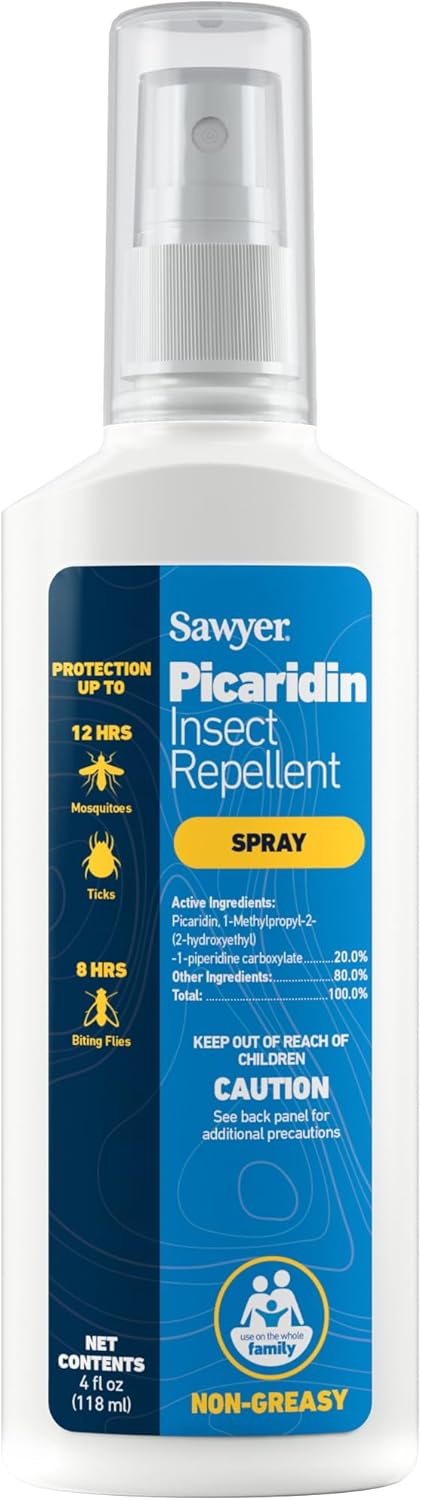
If you're not going somewhere with serious disease risk, this is the one. Odorless, safe for kids 2+, won't melt your gear, and 20% picaridin lasts 12–14 hours. It's also the pick if the smell or feel of DEET is the actual reason you've been skipping repellent in mosquito-heavy areas — picaridin matches DEET's protection without any of that. Buy it and stop thinking about it.
Picaridin has matched DEET in every head-to-head study since EPA added it to the approved list. The difference is everything practical: no petrochemical smell, no damage to plastics, sunglasses, or synthetic fabrics, and a lighter skin feel. The 20% concentration hits the sweet spot — the CDC-recommended level for full mosquito and tick protection without going to prescription-strength. Sawyer's formulation is the most consistent on the market and widely available. It works in the suburbs, at the beach, camping, and at outdoor events.
~$11
Active: Picaridin 20%
Duration: 12–14 hr
Safe for: Kids 2+
No: DEET smell / plastic damage
Honest caveat: If you're in a region with active West Nile, Zika, or dengue transmission, step up to DEET. Picaridin is excellent but the CDC recommends DEET specifically for disease-endemic areas.
Check price on Amazon →
Verdict
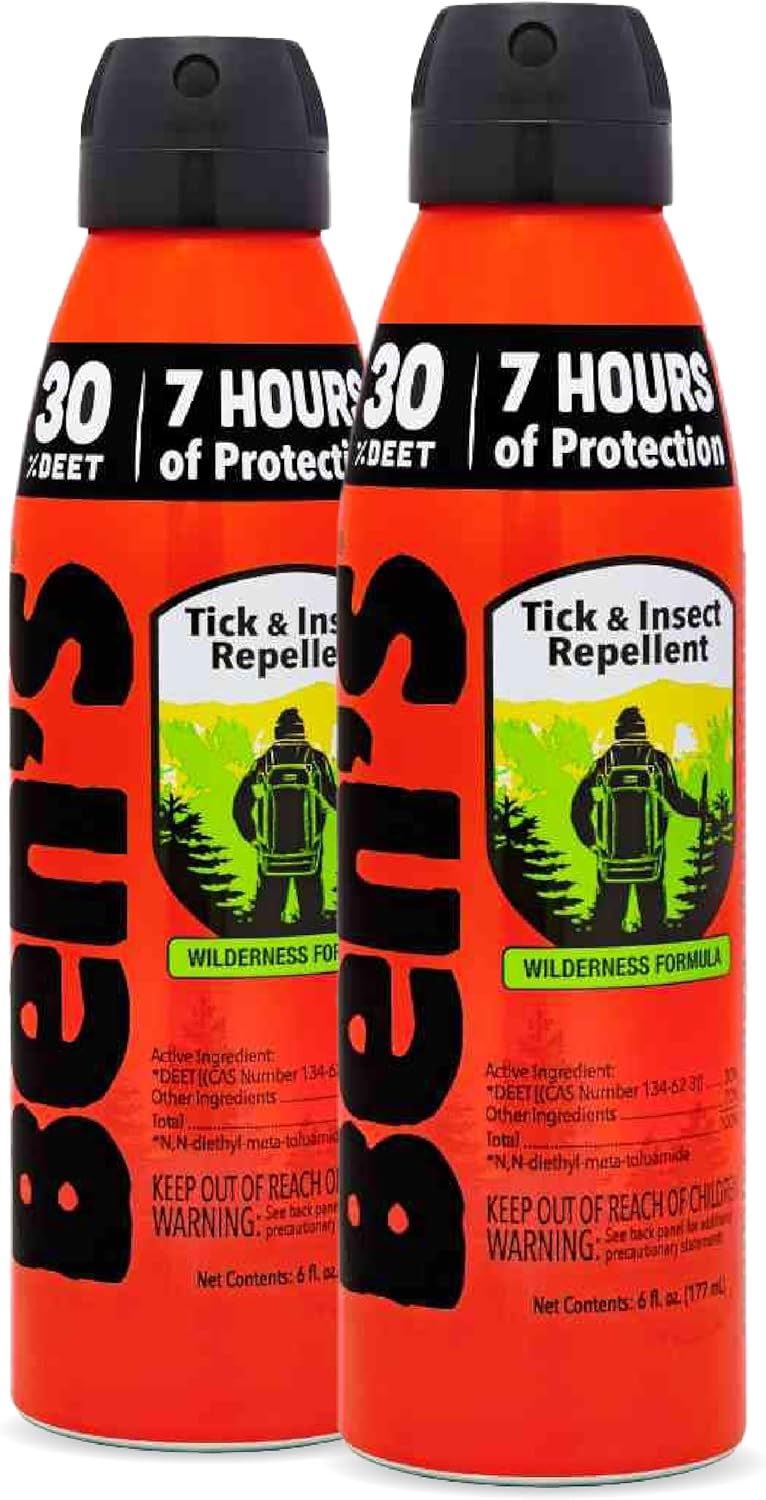
You're hiking in the Northeast, Midwest, or Pacific Northwest tick corridors — or anywhere Lyme is documented. DEET at 30% is the CDC's specific recommendation for ticks. Ben's is the most respected formulation at this concentration. This is the buy.
DEET works differently from picaridin — it disrupts the insect's olfactory receptors rather than masking your scent. For ticks specifically, DEET at 20–30% concentration has the longest and most consistent field data. Ben's 30% DEET is the standard carry for serious hikers, wildlife biologists, and outdoor workers in tick-endemic regions. It lasts 8 hours with one application. The smell is real, but if you're in Lyme country that's a fair trade. Pair it with permethrin-treated clothing (see card 5) for maximum protection.
~$12
Active: DEET 30%
Duration: 8 hr
Best for: Ticks, Lyme regions
Format: Pump spray
Honest caveat: DEET can damage certain plastics, synthetic fabrics, and watch faces. Apply carefully and wash off when you're done. Not recommended for kids under 2. For kids, Sawyer Picaridin is the safer default.
Check price on Amazon →
Verdict
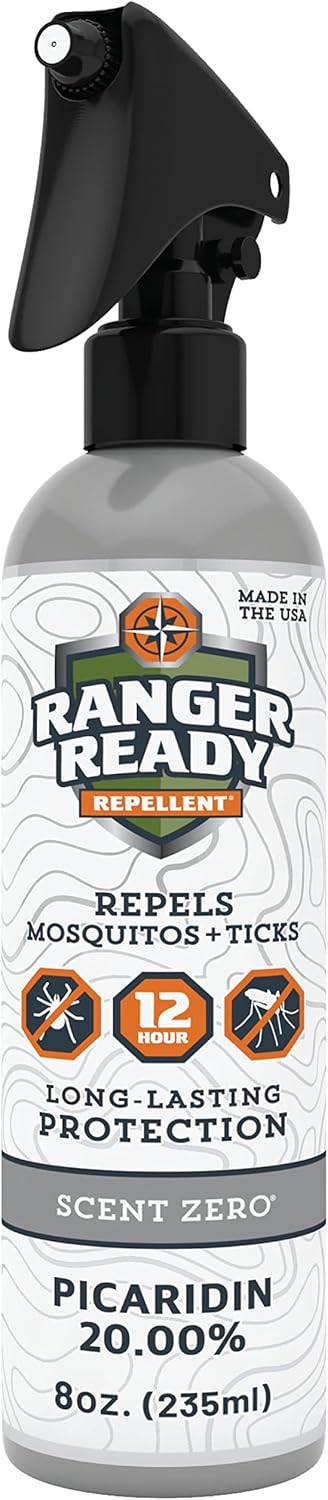
You want picaridin's clean feel and gear-safe formula but you're going somewhere that demands it — multi-day hiking, international travel, or outdoor work. Ranger Ready is the premium version of Sawyer. Same active, better packaging, higher confidence at the price.
Ranger Ready is built for people who take repellent seriously. The 20% picaridin concentration is identical to Sawyer, but the spray mechanism is more precise and the formulation is designed for high-sweat, high-activity use. It's the pick for people doing longer outdoor trips where they need to reapply confidently and don't want to smell like DEET at camp. Popular with backpackers, trail runners, and anyone spending more than a day in the field. The higher price point is the only real downside — for casual summer use, Sawyer is enough.
~$20
Active: Picaridin 20%
Duration: 12 hr
Best for: Backpacking, outdoor work
Safe for: Kids 2+
Honest caveat: You're paying a premium for packaging and brand confidence, not a different active ingredient. If budget matters, Sawyer Picaridin delivers the same protection for half the price.
Check price on Amazon →
Verdict
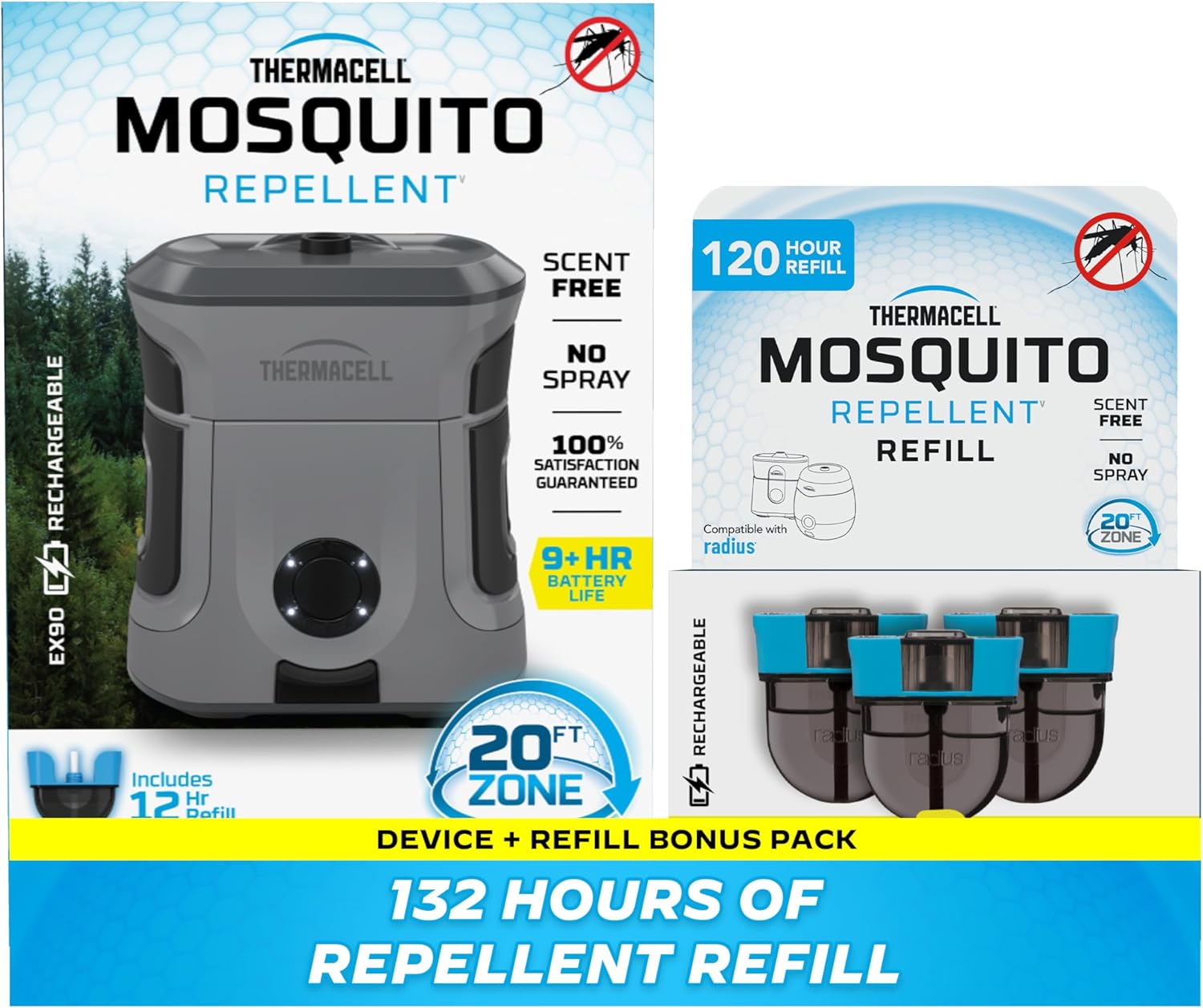
You're on the patio, at a campsite, or hosting outdoors and you don't want to spray anything on yourself or your guests. Thermacell creates a 20-foot mosquito-free zone using metofluthrin vapor. It works. This is the one gadget in the repellent category worth buying.
Thermacell uses heat to volatilize metofluthrin — an EPA-registered spatial repellent that disperses in the air and creates a protection zone without anyone applying anything. Independent studies confirm effectiveness within 15–20 feet in calm conditions. The EX90 runs up to 9 hours on a single butane cartridge. It's genuinely different from sprays — it doesn't protect you from ticks or when you're moving through brush, but for stationary outdoor time (dinner, drinks, evening hangouts) it removes the friction of remembering to spray. The refills are ongoing cost to factor in.
~$45
Active: Metofluthrin vapor
Zone: ~20 ft radius
Duration: 9 hr/cartridge
Use: Stationary only
Honest caveat: Zero protection for ticks or when you're moving. Wind kills effectiveness. Refill cartridges add up (~$5–6 each). This is a patio product, not a hiking product.
Check price on Amazon →
Verdict
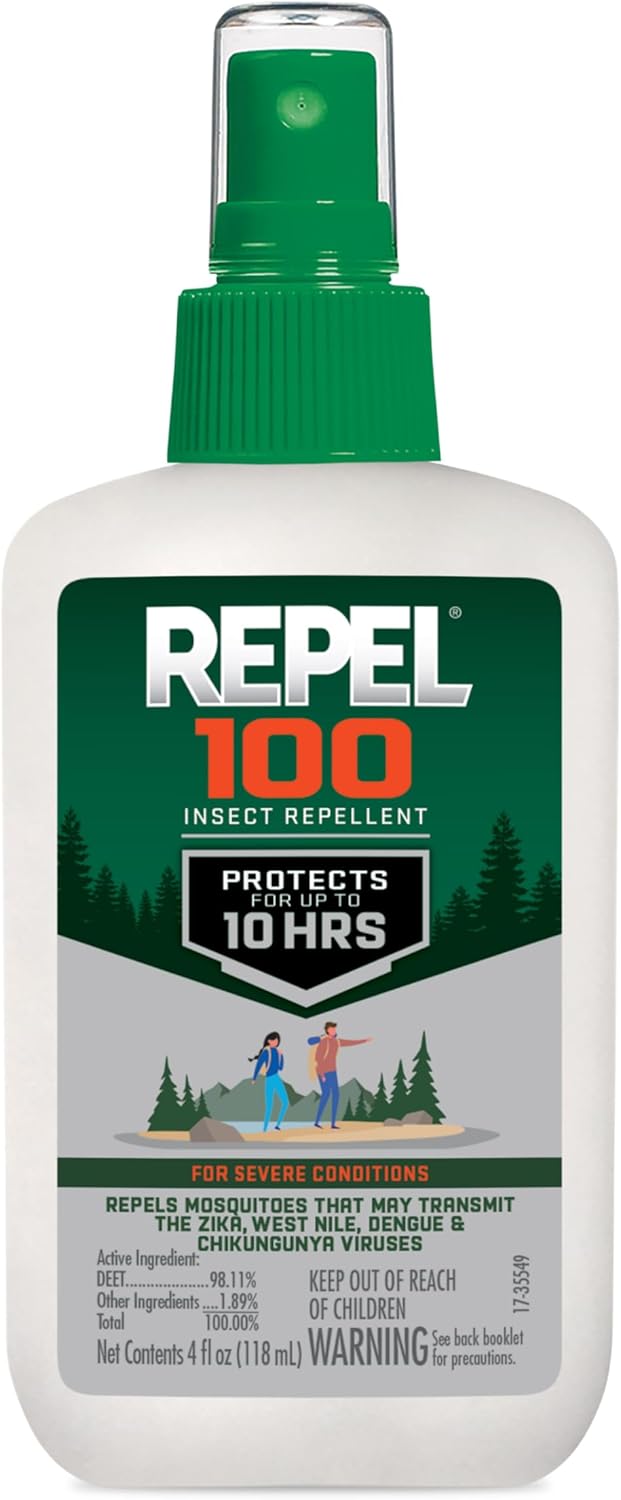
You're going somewhere where mosquito-borne disease is a genuine risk — malaria corridor, dengue zone, Amazon basin, sub-Saharan Africa. 98% DEET is the standard carry for this. It's harsh on skin and gear, but that's the trade-off. Don't use this for a summer barbecue.
98% DEET is categorically different from consumer repellents. At this concentration it provides up to 10+ hours of protection and is used by military, field researchers, and travelers in high-transmission disease zones. The CDC and WHO recommend high-concentration DEET for regions with active malaria or dengue transmission. It will damage plastics, synthetic fabrics, and painted surfaces on contact. Apply only to exposed skin, minimize coverage area, and wash off thoroughly when protection is no longer needed. This isn't everyday carry — it's trip-specific insurance.
~$8
Active: DEET 98.11%
Duration: 10+ hr
Best for: Disease-endemic travel
Use: Exposed skin only
Honest caveat: Overkill for 99% of use cases. Will dissolve watch straps, sunglasses, synthetic fabrics, and certain plastics. Not for children. Consult a travel medicine clinic before traveling to high-risk regions — repellent is one layer, not the full answer.
Check price on Amazon →
Also going outside?
Using sunscreen too? Here's the order that matters.
Applying repellent before sunscreen cuts your SPF protection. Two minutes of reading saves you a bad burn.
See the correct order →